Painful periods, irregular menstrual cycles, and difficulty conceiving can sometimes be signs of an underlying gynaecological condition, such as endometriosis or polycystic ovary syndrome (PCOS). Although both conditions can affect menstrual health and fertility, they differ in their causes, symptoms, and treatment approaches. Understanding these differences can help you recognise potential warning signs and seek timely medical advice. In this article, we’ll explore endometriosis vs. PCOS, including their key symptoms, causes, diagnosis, treatment options, and effects on fertility.
What Is Endometriosis?
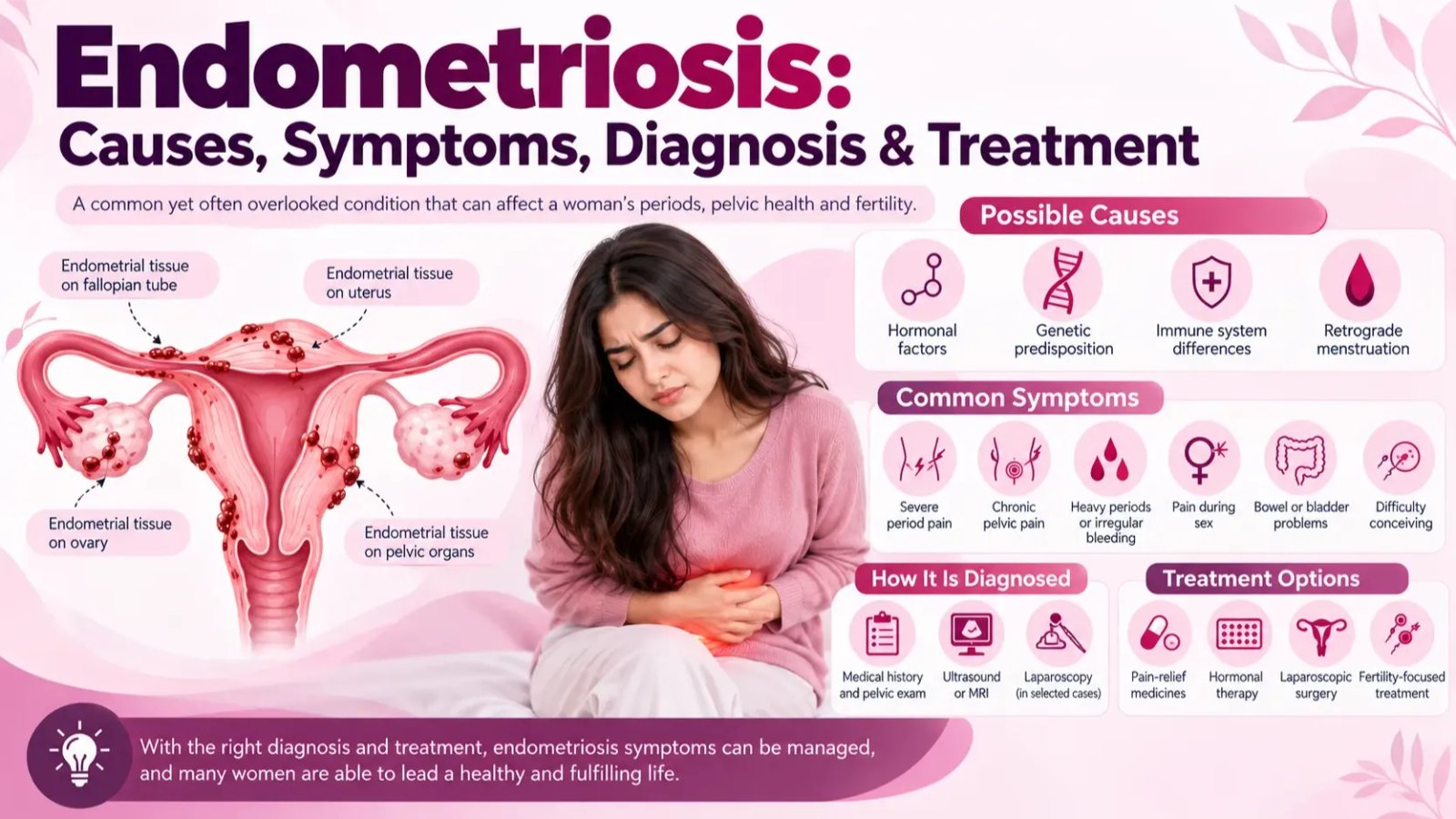
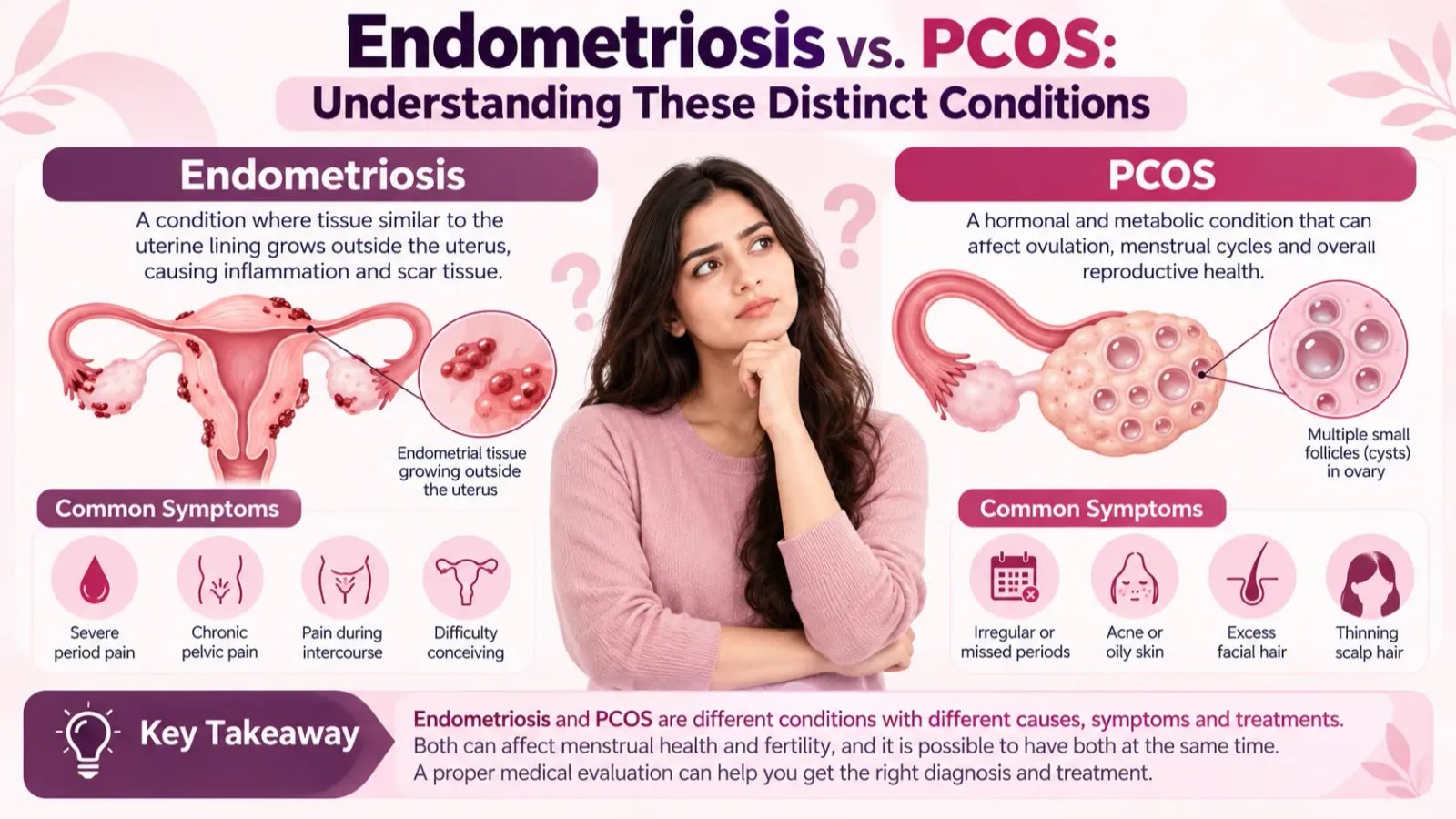
Endometriosis is a chronic condition in which tissue similar to the lining of the uterus grows outside the uterus. It commonly affects the ovaries, fallopian tubes and tissues lining the pelvis. In some cases, it can involve the bowel or bladder.
This tissue can contribute to inflammation, irritation and scar tissue formation, known as adhesions. These changes may cause severe menstrual cramps, persistent pelvic pain and discomfort during sexual intercourse. Some women also experience difficulty getting pregnant.
The exact cause of endometriosis is not fully understood, and symptoms can vary considerably from one person to another.
What Is PCOS?
Polycystic ovary syndrome (PCOS) is a hormonal and metabolic condition that can affect ovulation, menstrual cycles and other aspects of health.
Women with PCOS may have higher levels of androgens, hormones that are present in everyone but may be elevated in this condition. Insulin resistance, in which the body does not respond effectively to insulin, is also common in some women with PCOS.
PCOS can cause irregular or missed periods, acne, excess facial hair and thinning scalp hair. Some women experience weight gain or difficulty managing their weight, while others do not.
Despite its name, PCOS does not mean that every woman has ovarian cysts. The diagnosis depends on specific clinical findings rather than the presence of cysts alone.
Endometriosis vs. PCOS: What Are the Key Differences?
Although endometriosis and PCOS can both affect menstrual health and fertility, their underlying mechanisms are different.
These differences can help guide an evaluation, but symptoms alone cannot confirm either condition. It is also possible to have both at the same time. [1, 2]
What Causes Endometriosis and PCOS?
Possible causes of endometriosis
The exact cause of endometriosis remains unknown. Researchers are investigating several possible contributing factors, including:
- Retrograde menstruation: Menstrual blood flows backwards through the fallopian tubes into the pelvic cavity.
- Hormonal influences: Estrogen can support the activity of endometriosis tissue.
- Genetic factors: Having a close relative with endometriosis may increase the likelihood of developing it.
- Immune system factors: Differences in immune responses may contribute to the persistence of tissue outside the uterus.
No single theory explains every case.
Possible causes of PCOS
PCOS is associated with hormonal changes and metabolic factors. Potential contributors include:
- Increased androgen levels.
- Insulin resistance and related metabolic changes.
- Genetic predisposition and family history.
These factors can interfere with normal ovulation, causing irregular periods and sometimes affecting fertility.
Endometriosis Symptoms vs. PCOS Symptoms
Recognising the difference between endometriosis symptoms and PCOS symptoms can help you explain your concerns to a doctor.
Common symptoms of endometriosis
- Severe menstrual cramps that interfere with daily activities.
- Persistent pelvic or lower back pain.
- Pain during or after sexual intercourse.
- Pain during bowel movements or urination, particularly around menstruation.
- Heavy menstrual bleeding or spotting between periods.
- Difficulty getting pregnant.
Common symptoms of PCOS
- Irregular periods or missed periods.
- Excess facial or body hair.
- Acne or oily skin.
- Thinning hair on the scalp.
- Difficulty getting pregnant due to irregular ovulation.
- Weight changes or signs of insulin resistance in some women.
The symptoms may overlap, especially when menstrual cycles are irregular or fertility is affected. However, severe recurring pelvic pain is more characteristic of endometriosis and should not automatically be attributed to PCOS.
How Are Endometriosis and PCOS Diagnosed?
Both conditions require a medical evaluation, but the diagnostic process differs.
Endometriosis diagnosis
A doctor may review your menstrual history, pain patterns and family history before recommending further tests. These may include:
- Pelvic examination: To check for tenderness or abnormalities.
- Ultrasound or MRI: To identify ovarian endometriomas or certain forms of deep endometriosis.
- Laparoscopy: A minimally invasive procedure that allows a surgeon to examine the pelvis and, when appropriate, treat endometriosis.
Normal imaging results do not always rule out endometriosis, and surgery is not necessary in every case before treatment can begin.
PCOS diagnosis
PCOS is generally diagnosed when at least two of three features are present after other possible causes have been excluded:
- Irregular or absent ovulation.
- Clinical signs or blood test evidence of elevated androgen levels.
- Polycystic ovarian appearance on ultrasound, when relevant.
- Blood tests may also assess thyroid function, blood sugar and other hormone levels. An ultrasound is not always necessary to diagnose PCOS.
Endometriosis vs. PCOS: Treatment Options
Treatment depends on your symptoms, overall health and whether you are planning a pregnancy.
Endometriosis treatments
- Pain-relief medicines: May help manage menstrual cramps and pelvic pain.
- Hormonal treatment: Certain contraceptives and progestogen-based medicines may help control symptoms.
- Laparoscopic surgery: May be considered to remove endometriosis lesions or release adhesions when appropriate.
- Fertility care: Individualised treatment may be recommended if pregnancy is a priority.
Endometriosis may recur even after treatment, so follow-up care can be important.
PCOS treatment options
- Lifestyle management: Balanced nutrition, regular physical activity and sustainable weight management, where appropriate, can support metabolic health.
- Hormonal medicines: May help regulate periods and manage certain symptoms.
- Treatment for insulin resistance: Medication may be recommended for selected patients.
- Fertility treatment: Ovulation-inducing medicines may help women with PCOS who are trying to conceive.
Neither condition has a single treatment suitable for everyone. The best approach depends on the individual diagnosis and treatment goals.
Can You Have Both Endometriosis and PCOS?
Yes, it is possible to have both conditions. A woman may experience the irregular periods associated with PCOS alongside the pelvic pain associated with endometriosis.
If you have already been diagnosed with one condition but continue to experience unexplained symptoms, further evaluation may be appropriate. Treating PCOS may not resolve pain caused by endometriosis, and treating endometriosis may not correct hormonal changes associated with PCOS.
When Should You See a Doctor?
Consult a gynaecologist if you experience:
- Severe period pain that affects your daily activities.
- Periods that are consistently irregular or absent.
- Persistent pelvic pain or pain during intercourse.
- Unusual menstrual bleeding.
- Excess facial hair, persistent acne or unexplained hair thinning.
- Difficulty getting pregnant.
Sudden, severe pelvic pain, particularly with fainting or possible pregnancy, requires urgent medical attention.
Conclusion
Endometriosis and PCOS are different conditions that can affect menstrual health, fertility, and overall well-being. Endometriosis often causes pelvic pain and painful periods, while PCOS can lead to irregular menstrual cycles and hormonal changes that affect ovulation. Although the two conditions can occur together, each requires proper evaluation and an individualized treatment approach. If you experience severe period pain, irregular periods, or difficulty conceiving, consult Dr. Sonu Singh, a specialist in endometriosis surgery in Lucknow. Timely medical assessment can help identify the underlying cause of your symptoms and guide you toward appropriate treatment for your reproductive health.
Frequently Asked Questions (FAQs)
1. What is the main difference between endometriosis and PCOS?
Endometriosis occurs when tissue similar to the uterine lining grows outside the uterus, often causing pelvic pain and painful periods. PCOS is a hormonal and metabolic condition that can affect ovulation, leading to irregular periods and other hormonal symptoms.
2. What are the common symptoms of endometriosis and PCOS?
Endometriosis commonly causes severe menstrual cramps, chronic pelvic pain, pain during intercourse, and sometimes difficulty conceiving. PCOS may cause irregular or missed periods, acne, excess facial hair, and thinning scalp hair. Symptoms can vary from person to person.
3. Which is more painful, endometriosis or PCOS?
Endometriosis is more commonly associated with severe menstrual cramps and persistent pelvic pain. Severe pelvic pain is not a defining symptom of PCOS, so ongoing or intense pain should be evaluated by a healthcare professional.
4. Can both endometriosis and PCOS affect fertility?
Yes, both conditions can affect fertility, but in different ways. Endometriosis may affect fertility through inflammation and scar tissue, while PCOS can interfere with ovulation. However, neither condition automatically means you cannot get pregnant.
5. Can you have endometriosis and PCOS at the same time?
Yes, both conditions can occur together. For example, a woman may experience painful periods due to endometriosis and irregular menstrual cycles due to PCOS. A proper medical evaluation can help identify and manage both conditions.
6. How are endometriosis and PCOS diagnosed?
Endometriosis is evaluated through medical history, symptoms, examination, and imaging such as ultrasound or MRI. In selected cases, laparoscopy may be considered. PCOS is diagnosed using a combination of menstrual history, signs or blood tests of elevated androgen levels, and sometimes ultrasound, after other causes are excluded.
7. What is the treatment for endometriosis and PCOS?
Endometriosis treatment may include pain-relief medicines, hormonal therapy, or laparoscopic surgery in selected cases. PCOS management may include lifestyle changes, hormonal medicines, treatment for metabolic concerns, or fertility treatment, depending on symptoms and individual needs.
8. Can endometriosis or PCOS be cured permanently?
Neither condition has a guaranteed permanent cure. However, symptoms can often be managed with appropriate treatment and follow-up care. Treatment goals depend on the condition, symptom severity, and whether pregnancy is desired.
9. Can irregular periods be a sign of endometriosis or PCOS?
Irregular or missed periods are commonly associated with PCOS. Endometriosis is more often associated with painful periods, although some women may also experience irregular bleeding. Medical evaluation can help determine the underlying cause.
10. When should I consult a gynaecologist for endometriosis or PCOS?
Consult a gynaecologist if you experience severe period pain, persistent pelvic pain, irregular or absent periods, unusual bleeding, or difficulty conceiving. Dr. Sonu Singh in Lucknow can assess gynaecological symptoms and discuss suitable evaluation and treatment options, including specialist care for endometriosis when appropriate.
About Dr. Sonu Singh
Dr. Sonu Singh is a Senior Consultant Gynaecologist and European-trained Minimal Access Surgeon in Lucknow with over 14+ years of clinical excellence. She completed advanced fellowships in Verona, Italy, and Bordeaux, France, specializing in nerve-sparing endometriosis excision, fertility preservation, and complex gynaecological laparoscopy.
Clinic: Gomti Nagar, LucknowCategories
Browse by clinical specialty