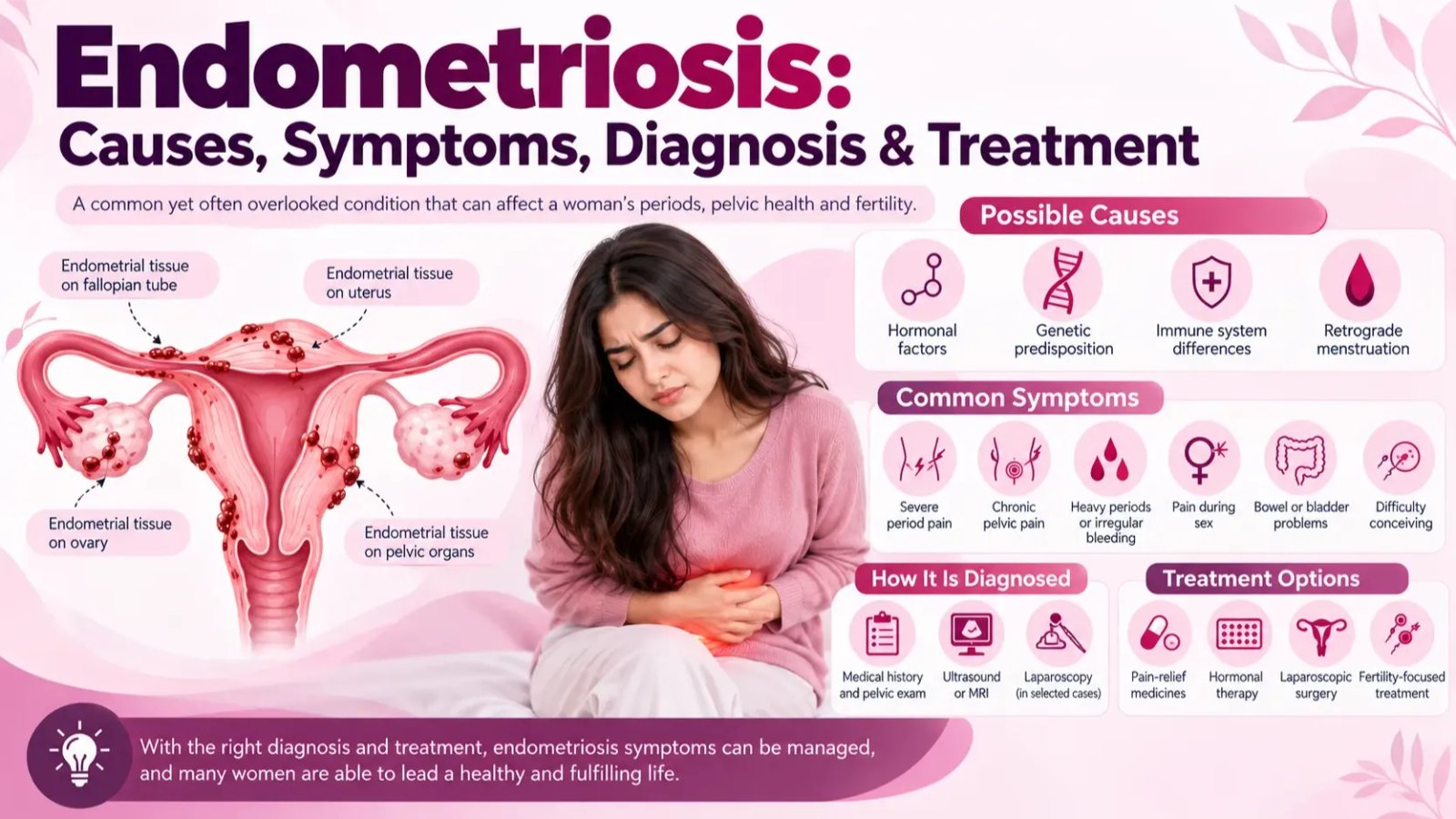
Endometriosis is a chronic medical condition where tissue similar to the inner lining of the uterus (the endometrium) grows outside the uterus, most commonly on the ovaries, fallopian tubes, and outer surface of the uterus. It can cause inflammation, painful periods, persistent pelvic pain, and sometimes difficulty getting pregnant. Many women experience symptoms for years without knowing the underlying cause. Understanding the condition, recognising its warning signs, and seeking timely medical advice can help with diagnosis and treatment. In this blog, we’ll explore the causes, symptoms, diagnosis, and treatment options for endometriosis.
What Is Endometriosis?
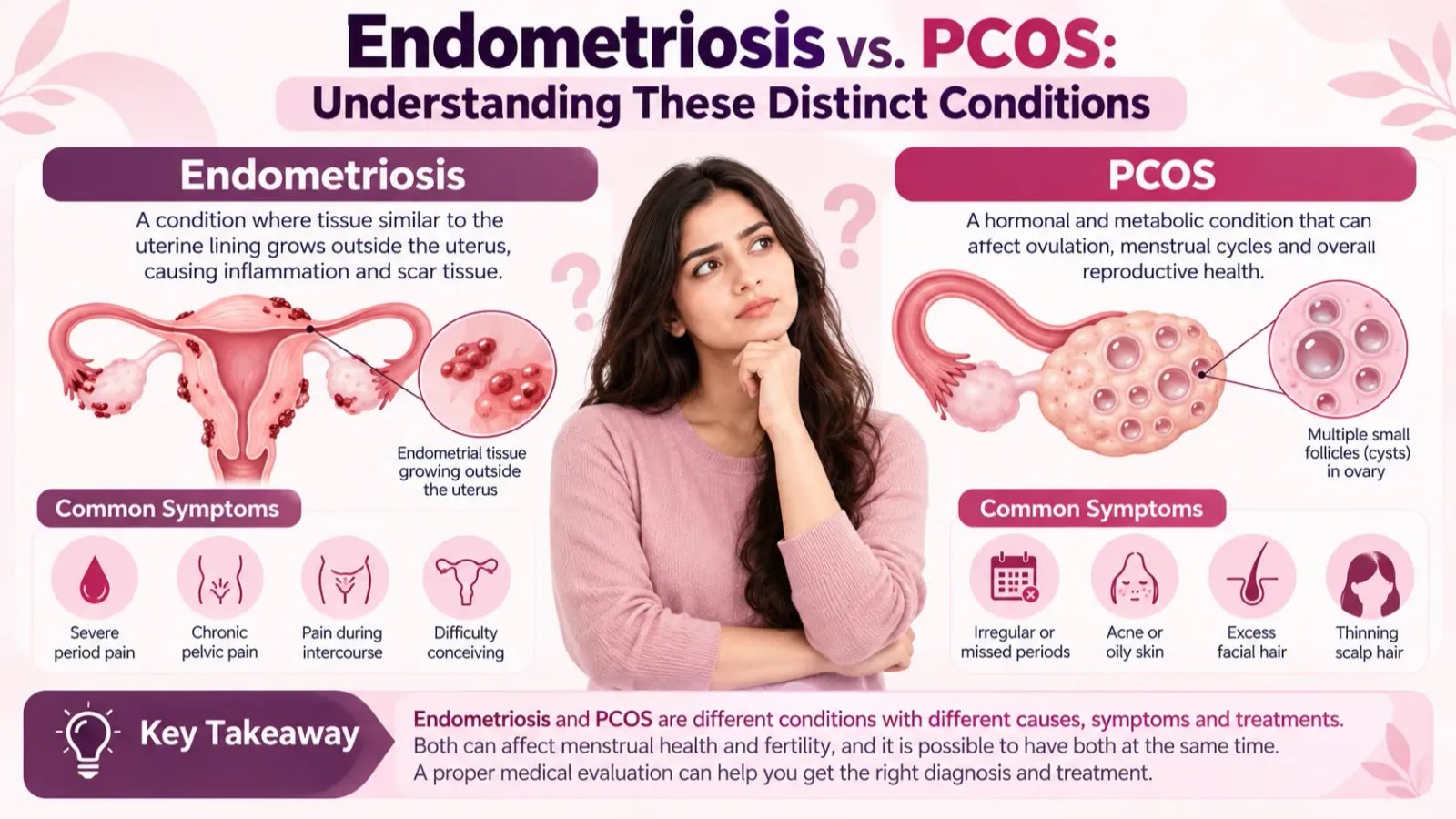
Endometriosis is a chronic condition in which tissue similar to the lining of the uterus grows outside the uterus. It commonly affects the ovaries, fallopian tubes and the tissue lining the pelvis. In some cases, it can also affect the bladder or bowel.
This tissue responds to hormonal changes during the menstrual cycle. It can cause inflammation, irritation and scar tissue, known as adhesions. These changes may lead to pain, heavy periods and fertility difficulties.
The severity of endometriosis varies from person to person. Some women experience significant pain, while others may have few or no noticeable symptoms.
What Causes Endometriosis?
The precise etiology of endometriosis is not yet known. Several biological and hormonal factors have been suggested by researchers to be associated with its formation.
These factors and potential causes include:
Retrograde menstruation: The menstrual blood moves back through the fallopian tubes into the pelvis. It is an example of potential causes of the disease but it does not account for every single case.
Hormonal factors: Estrogen is involved in the proliferation and activity of endometriosis cells.
Immune system factors: There are individual differences in how the immune system reacts to tissue outside of the uterus.
Genetic factors: If a woman has a close relative who suffers from this disease she is at a higher risk of having it herself.
Other biological factors: Some other biological factors that contribute to this problem are being researched by scientists.
The presence of some risk factors does not necessarily result in endometriosis.
What Are the Symptoms of Endometriosis?
Symptoms of endometriosis vary in type and degree of severity. Some patients suffer from acute pain, while others learn about their illness during an examination for infertility reasons.
Main symptoms of endometriosis are:
1. Severe Menstrual Pain
One of the most frequent symptoms is painful menstrual cramps. They usually start before the period and last several days. Frequent menstrual cramps that prevent one from working and sleeping should be discussed with a doctor.
2. Persistent Pelvic Pain
Some patients have chronic pain in the lower part of the abdomen and pelvis. This pain occurs regardless of the period and can be exacerbated at certain stages of the cycle.
3. Heavy Periods or Bleeding Between Periods
This disease can be characterized by heavy blood loss during menstrual periods and even between periods. It should be noted that such symptoms may be caused by other gynecological diseases.
4. Painful sex
Painful sex is one of the symptoms of endometriosis that arises due to inflammation of tissues surrounding the uterus or other pelvic organs.
5. Pain When Defecating Or Urinating
When endometriosis is in the areas near the bowel or the bladder, there will be pain when passing stool or urine especially during the menstrual period.
6. Bowel Issues
Symptoms include bloating, constipation, diarrhea and abdominal pain. These symptoms are not unique to endometriosis; hence, a medical diagnosis is important to ascertain the cause of the issue.
7. Infertility
Endometriosis causes infertility through inflammatory reactions, formation of adhesions, or issues involving the ovaries and the fallopian tubes. Endometriosis alone is not an absolute barrier to pregnancy.
How Is Endometriosis Diagnosed?
Making a diagnosis of endometriosis can sometimes take some time as the symptoms associated with this condition can also be present in other diseases. Below you will find what diagnostic methods your doctor might suggest.
Medical History and Pelvic Exam
The physician will inquire into your menstrual cycle, pain or bleeding, your family history and plans for getting pregnant. The pelvic exam will allow finding tender areas, masses or any other changes.
Ultrasound or MRI
Ultrasound helps to discover whether there are endometriomas in the ovaries, which are cysts found in patients with endometriosis. MRI will be helpful in cases of deep endometriosis or for preparing for treatment.
Negative imaging results do not mean that endometriosis is not possible, especially when it is located deep or is not visible on the scans.
Laparoscopy
Laparoscopy is a minimally invasive surgery during which the physician examines your pelvic organs with the use of a camera.
However, in certain cases surgery may not be required before making a suspected or clinical diagnosis.
What Are the Best Endometriosis Treatments?
The choice of treatment depends on the location and the severity of the endometriosis, other treatment attempts, and the patient’s desire for future childbearing. Generally speaking, treatment options include medication, surgical intervention, and a combination of both.
1. Pain-Relief Medicines
The types of pain-relief medications that may be prescribed to reduce pain from menstrual cramps and pelvic discomfort may include nonsteroidal anti-inflammatory drugs (NSAIDs), combined oral contraceptives, or other pain medications. The choice of medications will depend on the patient’s medical history and health status.
Pain-relief medications do not treat the endometriosis lesions.
2. Hormonal Treatment
In addition to pain-relief medicines, hormonal medicines, including progestogen-only contraceptives, combined contraceptives, and other hormonal medicines, may be prescribed to treat pain and regulate menstrual bleeding.
Hormonal treatment is dependent on the woman’s pregnancy wishes. Hormonal treatment may be stopped after pregnancy is achieved.
3. Laparoscopic Endometriosis Surgery
Medication may not be enough to provide relief if the endometriosis is severe. In that case, the doctor may opt for surgery.
Laparoscopic surgery involves the removal and destruction of endometrial lesions and the release of adhesions. This may alleviate pain and improve fertility in some cases.
Surgery on advanced endometriosis that involves the bowel and the bladder, for example, usually requires the creation of a detailed plan and a specialized surgical team.
4. Fertility-focused treatment
Factors such as age and the endometriosis stage must be taken into account, along with the ovarian reserve and other fertility factors, in devising a treatment plan, in order to enable pregnancy. Depending on the case, surgery, assisted reproductive technology (ART) and/or fertility treatment may be discussed.
Endometriosis may reoccur post-surgery and therefore lifelong follow-up may be necessary.
When Should You See a Doctor?
Consult a gynecologist when you have:
- Severe period pains interfering with your daily routine
- Consistent pelvic pain or lower back pain
- Painful intercourse
- Abnormal bleeding or heavy periods
- Pain during defecation/urination during periods
- Difficulty conceiving
Severe pelvic pain suddenly, especially with fainting, fever or pregnancy, demands immediate medical care.
Conclusion
Endometriosis can cause painful periods, persistent pelvic pain, and fertility challenges, but appropriate treatment can help manage symptoms and improve quality of life. Depending on the severity of the condition and your reproductive goals, treatment may include pain-relief medication, hormonal therapy, or laparoscopic surgery.
If endometriosis symptoms are affecting your daily life, consult Dr. Sonu Singh, a specialist in endometriosis surgery in Lucknow, for a thorough evaluation and personalized treatment guidance. Early assessment can help you understand your condition and explore suitable options for your reproductive health.
Frequently Asked Questions (FAQs)
1. What is endometriosis and how does it affect the body?
Endometriosis is a chronic condition in which tissue similar to the lining of the uterus grows outside the uterus. It can cause inflammation, pelvic pain, scar tissue, painful periods, and sometimes fertility difficulties.
2. What are the first signs of endometriosis?
Common signs include painful periods, persistent pelvic pain, heavy menstrual bleeding, and pain during sexual intercourse. Some women may also experience pain during bowel movements or urination, especially during menstruation.
3. What causes endometriosis?
The exact cause of endometriosis is not fully understood. Hormonal influences, genetic factors, immune system differences, and retrograde menstruation are among the possible contributing factors being studied.
4. Can endometriosis cause infertility?
Yes, endometriosis can affect fertility in some women by contributing to inflammation, scar tissue, or changes involving the ovaries and fallopian tubes. However, many women with endometriosis can still conceive naturally.
5. How is endometriosis diagnosed?
Diagnosis may involve reviewing your symptoms and medical history, a pelvic examination, and imaging tests such as ultrasound or MRI. Laparoscopy may be considered in selected cases, but surgery is not always necessary before treatment begins.
6. Is there a permanent cure for endometriosis?
Currently, there is no guaranteed permanent cure for endometriosis. However, treatments such as hormonal medicines, pain relief, and surgery can help manage symptoms. Symptoms may return after treatment, so follow-up care can be important.
7. Is surgery always necessary for endometriosis?
No, surgery is not always necessary. Treatment may begin with pain-relief medicines or hormonal therapy. Laparoscopic surgery may be considered when symptoms persist, certain complications are present, or fertility-related concerns require further evaluation.
8. Can endometriosis cause irregular or heavy periods?
Endometriosis can be associated with heavy menstrual bleeding, spotting between periods, and painful menstruation. However, irregular or heavy bleeding can have other causes, so medical evaluation is important.
9. Can endometriosis come back after laparoscopic surgery?
Yes, endometriosis symptoms or lesions can recur after surgery. The likelihood varies between individuals and depends on several factors. Your doctor may recommend follow-up care or hormonal treatment, depending on your symptoms and pregnancy plans.
10. When should I consult a gynaecologist for endometriosis?
Consult a gynaecologist if severe period pain affects your daily activities, pelvic pain persists, intercourse is painful, or you experience difficulty conceiving. Dr. Sonu Singh in Lucknow can assess your symptoms and discuss appropriate treatment options, including specialist evaluation for endometriosis surgery.
Related Services
- Endometriosis Surgery
- Laparoscopic Endometriosis
- Advanced Gynaecological Laparoscopy
- Ovarian Cyst Surgery
- Infertility & Reproductive Medicine
Related Blogs
About Dr. Sonu Singh
Dr. Sonu Singh is a Senior Consultant Gynaecologist and European-trained Minimal Access Surgeon in Lucknow with over 14+ years of clinical excellence. She completed advanced fellowships in Verona, Italy, and Bordeaux, France, specializing in nerve-sparing endometriosis excision, fertility preservation, and complex gynaecological laparoscopy.
Clinic: Gomti Nagar, LucknowCategories
Browse by clinical specialty